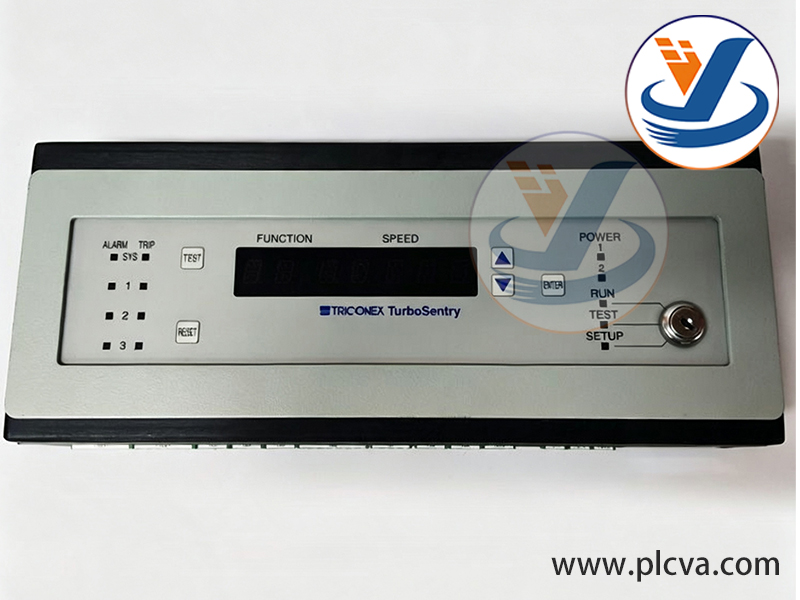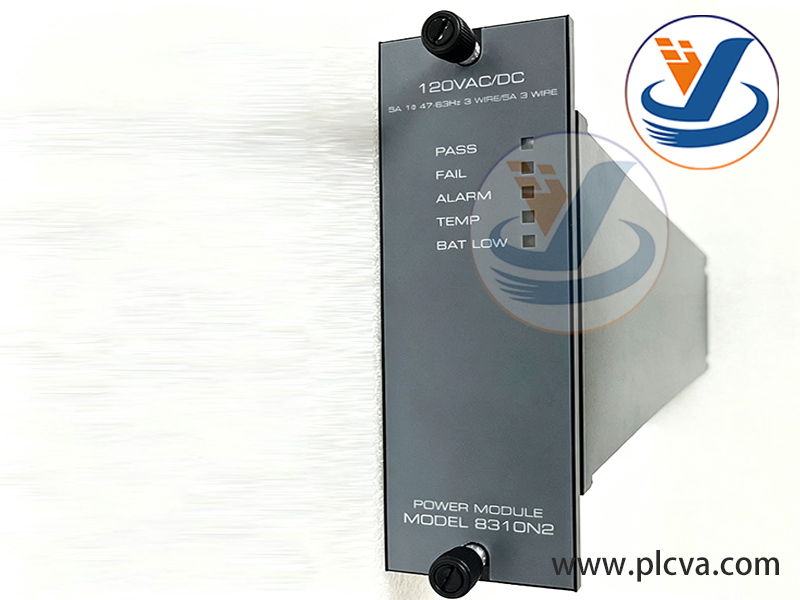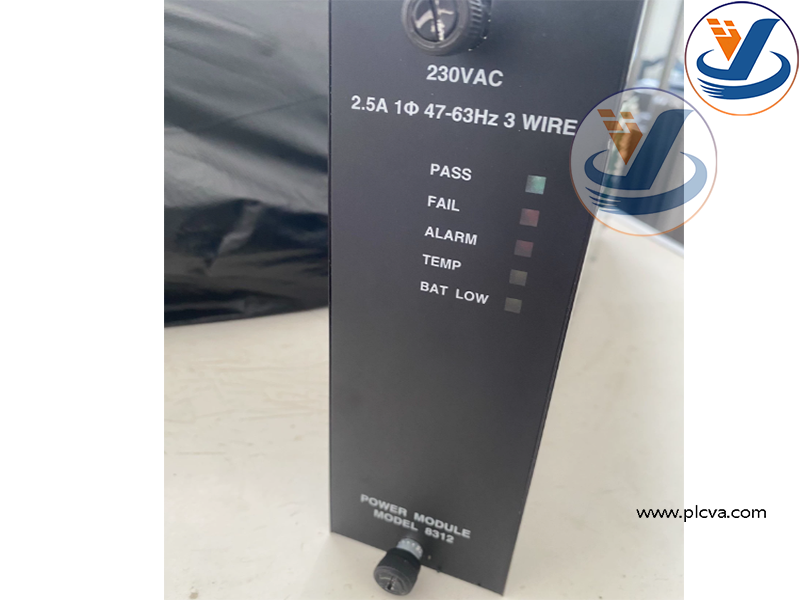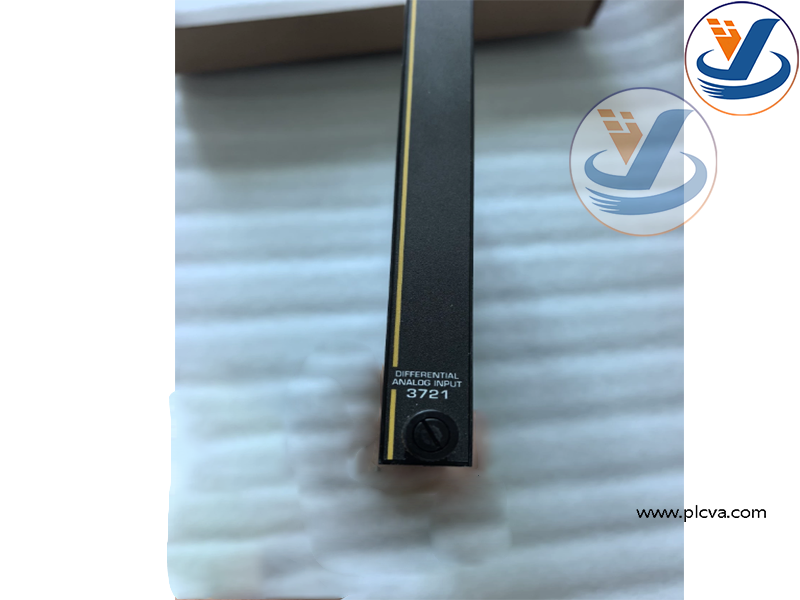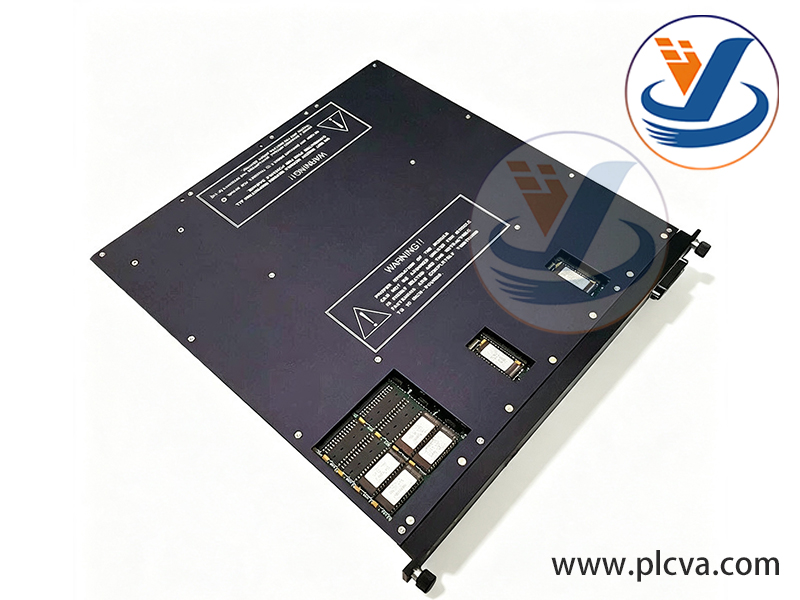
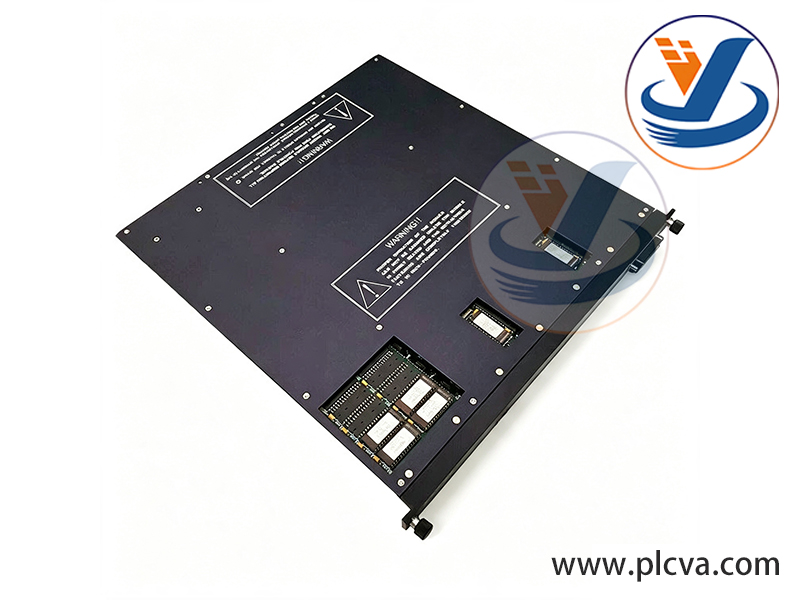
TRICONEX Emp II 3005 Enhanced Multi-processor Generation II Processor Module
Warranty: 365 days
Quality: Original module
Condition: New / Used
Warehouse: Spot
Delivery time: Shipped in 3 days after payment
Mailbox:plcvarious@foxmail.com
Introduction
1.Term Explanation
- TRICONEX: Brand name, commonly called Kangjisen, now owned by Schneider Electric. It specializes in Tricon TMR Triple Modular Redundant SIS Safety Instrumented Systems for safety interlock of high-risk industrial processes.
- Emp II: Abbreviation for Enhanced Multi-processor Generation II, the core CPU series of Tricon systems. Compared with Generation I, it features faster computing speed, larger memory, wider bus bandwidth and higher-precision fault diagnosis.
- 3005: Original factory hardware model code, the main processor dedicated to Tricon V9.6 / V10 systems, matching part number 7400120-500.
- Processor Module: Main computing unit of the whole safety control system. The word “Processador” in the original text is a Portuguese translation error.
Supplementary Architecture Note:
The Tricon system adopts 2-out-of-3 fault-tolerant TMR architecture. Three Emp II 3005 processors must be installed synchronously in the rack. Three CPUs perform independent synchronous calculation with automatic hardware voting. Failure of one single processor will not cause system shutdown or interlock failure, meeting SIL3 safety integrity level.
2. Core Main Purposes
- Calculation of safety interlock logic (core function) Equipped with a 32-bit MPC860 processor, it independently and parallelly executes safety logic including ESD Emergency Shutdown, F&G Fire & Gas monitoring, HIPPS high-integrity pressure protection, FSSS furnace safety control for boilers. It collects real-time signals from DI digital input and AI analog input modules, then sends trip and alarm control commands to DO/AO output modules after logic operation.
- Triple redundant data synchronization & hardware voting Via the 25Mbps TriBus triple proprietary synchronous bus, three 3005 processors exchange operation data in real time and output control signals through hardware 2oo3 voting. Faults of single CPU, memory or bus will not affect overall control, eliminating risks of spurious trip or fail-to-trip, fully complying with IEC 61508 SIL3 safety standards.
- Unified scheduling and management of all rack IO and communication modules It manages all IO cards (DI/DO/AI/AO), CIM/TCM communication modules and backplanes in the rack. It cyclically collects field process data, distributes output commands, and real-time diagnoses faults such as wire breakage, short circuit and offline modules.
- Millisecond-level SOE event storage and comprehensive fault diagnosis Onboard flash memory and battery-backed SRAM completely record interlock actions, system faults and module hot-swap events to generate high-precision Sequence of Events (SOE) logs. A diagnostic serial port and Ethernet port are reserved to upload fault logs for safety accident tracing.
- Overall scheduling of external communication It uniformly manages all external protocols (Modbus, OPC, Industrial Ethernet) of TCM and CIM communication modules, realizes bidirectional data exchange between SIS safety zone and DCS, HMI, MES and third-party PLCs, and isolates safety networks from non-safety networks.
- Program storage, download and online configuration 6MB Flash memory solidifies safety control programs, while 16MB DRAM runs real-time logic. It supports logic download, online modification and program verification via TriStation software, with built-in anti-tampering verification function.
- Support of redundant hot-swap maintenance A single faulty processor can be hot-swapped online without system shutdown. The other two CPUs maintain bumpless safety interlock operation, avoiding full production halt of high-risk plants and reducing economic losses.
3. Applicable Application Scenarios
Scenario 1: Petrochemical Refining Units (Core Application)
ESD Emergency Shutdown Systems of oil refineries, ethylene plants, hydrogenation and catalytic reforming units. As the main SIS controller, the 3005 monitors over-temperature and over-pressure interlocks of reactors and heating furnaces, instantly cutting off feedstock and fuel gas upon abnormalities to avoid explosion and fire hazards.
Scenario 2: Oil & Gas Stations, LNG Plants and Long-distance Oil & Gas Pipelines
Fire & Gas safety systems for offshore oil platforms, onshore gas gathering stations, pipeline compressor stations and LNG storage tanks. Adapted to explosion-proof, high-vibration and wide-temperature outdoor cabinets, it controls wellhead shutoff valves, interlock shutdown for combustible gas leakage and HIPPS overpressure protection of high-pressure pipelines.
Scenario 3: High-temperature & High-pressure Sections of Coal Chemical, Ammonia and Methanol Plants
Core safety controller for gasifiers and synthesis towers, executing emergency cut-off logic for oxygen and gasification agents to prevent catastrophic safety accidents such as furnace deflagration and high-pressure medium leakage.
Scenario 4: Furnace Safety Supervision System (FSSS) of Thermal Power & Waste Incineration Boilers
Core computing unit for boiler ignition, furnace purge and gas fuel cut-off interlocks, preventing flashback and furnace deflagration, complying with mandatory SIL3 safety standards for power industries.
Scenario 5: Explosion-proof Reaction Workshops of Fine Chemical & Pharmaceutical Industry
Safety interlock systems for high-risk reactors involving nitration, chlorination and oxidation processes. It real-time monitors temperature, pressure and liquid level, automatically cutting raw material supply, shutting down heating and activating pressure relief protection under abnormal conditions.
Scenario 6: High-pressure Production Lines for Fertilizer, Chemical Fiber and Rubber
Safety interlock calculation for high-pressure reactors and steam pipe networks, controlling linkage actions of unit shutdown and pressure relief valves.
Scenario 7: Anti-surge Protection System for Large TS3000 Compressor Units
Main control unit for large compressors in petrochemical plants. It calculates anti-surge curves in real time and dynamically adjusts valve opening to ensure long-term stable operation of units.
Scenario 8: Overseas Complete Oil & Gas / Chemical Equipment Export Projects
Standard processor for global Tricon V9/V10 systems with unified spare part numbers. It complies with explosion-proof and safety certifications of various countries, with high universality of maintenance spare parts for overseas factories.
4. Supplementary Key Hardware & Safety Features
- Safety Certifications: IEC61508 SIL3, IEC61511, TUV, UL industrial explosion-proof certifications;
- Hardware Specifications: 32-bit MPC860 50MHz processor, 16MB DRAM, 32KB battery-backed SRAM, 6MB program flash memory;
- Bus Performance: TriBus triple redundant synchronous bus with 25Mbps transmission rate and 32-bit CRC check to eliminate transmission errors;
- Interfaces: Optically isolated RS232 diagnostic serial port and RJ45 Ethernet port, isolating external surge interference to protect core computing units;
- Environmental Adaptability: Industrial wide-temperature design, stable operation in explosion-proof cabinets with strong electromagnetic interference and vibration;
- System Compatibility Limit: Only compatible with Tricon V9.6 and newer main racks; three identical 3005 processors must operate synchronously to form a complete control system.
| Understand the lowest price, please contact via email: plcvarious@foxmail.com |
| More products: www.plcva.com |
| Many products are not yet on the shelves please contact us for more products. |